
Part 2: Housing Finances and Disraeli Project Progress – 03/09/2026
- PECConnect
- Mar 9
- 5 min read
On the financial side, Arryn McNichol, Director of Finance and Information Technology, laid out the basics of the corporation’s current position. He said the housing corporation has about $550,000 in cash and about $690,000 due to the County, and explained that the current statements include a balance sheet, profit and loss statement, and capital worksheet. He also said the corporation is in the kind of financial position expected at the development stage.
From there, several board members started pressing on what those numbers really mean.
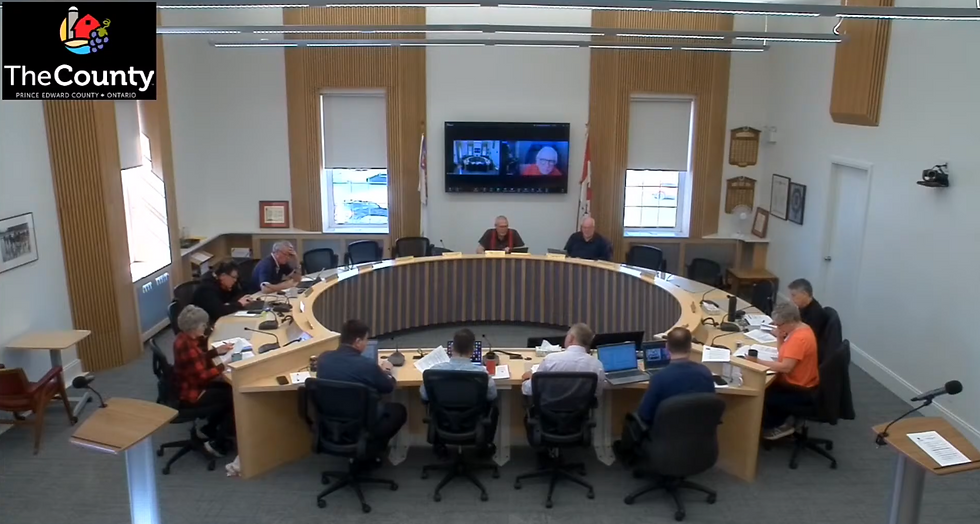
View the entire PEC Council Meeting; or view our recap.
Penny Morris questioned the $36,000 CMHC loan payable and also asked what the large work in progress figure represented. Arryn answered that staff still need to reconcile which CMHC funds relate to which project, and that the work in progress amount reflects money already spent on capital projects so far.
Hilary Spriggs pushed hardest on the issue of the money shown as due to the County. She argued that, in the absence of a formal repayment agreement, that amount may look more like a contribution than a true debt. Her concern was very clear: if outside lenders see a large liability on the books, it could make the corporation look financially weaker than it really is and hurt its chances of getting financing.
Councillor Phil St-Jean, who chaired the meeting, backed the need for more historical information. He said much of this goes back years before some current members joined the board, and that the board needs the full package of documents, including appraisals and transaction records, to make sound decisions moving forward.
Councillor Brad Nieman followed up on Penny’s point and asked how the board could move forward if it wants the County to absorb some costs, particularly costs tied to environmental issues at Nile Street. Staff responded that if the board wants to make a formal request to Council, staff can bring that forward.
Councillor John Hirsch added that the corporation is already in a tough financing environment and said any way the books can be made to look stronger would help.

When it came time to vote, the board supported a motion to receive the financial report and direct staff to complete a reconciliation of CMHC funding tied to the Nile Street Wellington and Disraeli Street Picton projects. Then Hilary added an amendment directing staff to also review the service level agreement for details about debt and repayment. That amendment carried, and then the full motion as amended also carried. The transcript records both votes as approved in favor.
Nile Street Wellington and older project costs
The Nile Street side of the discussion was tied closely to the question of historical costs and environmental remediation.
Penny said that a high percentage of the unexpected expenses appeared to be connected to environmental issues at Nile Street. She argued that at least some of those costs should potentially be absorbed by the County, since the property had those issues before the affordable housing corporation tried to move it toward development.
St-Jean agreed with that concern and said plainly that the board needs more information, especially because the municipality would have had to deal with some of those issues anyway if it had handled the property itself.
There was no final vote on asking Council to absorb those costs at this meeting. Instead, staff were directed to gather more documents and background material first. St-Jean also floated the possibility of a special meeting before the next regular one so the board would not lose a month waiting to continue the discussion.
Disraeli Street financing and next steps
The Disraeli Street Apartments project took up the other major share of the meeting, especially around financing and timing.
Elis Ziegler walked the board through updates on the project and the latest work on the pro forma. She said staff and the working group had been trying to lower costs and improve the financial picture, while also pursuing several federal funding routes.
Hilary then gave the clearest explanation of the financing issue. She said the corporation had been working with First National Financial on a route through CMHC MLI Select, but recent conversations showed the corporation may be seen as a weak borrower because it has limited financial strength and no completed project yet. She said that likely means the corporation will need some up-front equity to make the project work.

The board then moved through a series of motions, one by one.
First, it voted to support a Build Canada Homes application for $1.7 million in grant funding for Disraeli. Hilary explained that if that application succeeds, it could make all units in the building affordable. The motion carried in favor.
Next, Hilary proposed changing the wording on the pro forma motion so the board would receive the in-progress pro forma rather than claim it was finalized. That motion was seconded and carried in favor.
After that, Hilary proposed extending the contract negotiation period with Theberge Homes to April 30, 2026. That also carried in favor.
Then she moved that the board continue to pursue financing for Disraeli through First National Financial. That motion also carried in favor, although John Hirsch openly criticized the idea that First National might charge a brokerage fee to help place the loan elsewhere.
What this means for the locals
For locals following affordable housing in the County, this meeting showed that the board is still trying to move real projects ahead, but the hard part is no longer just finding land. It is sorting out old costs, making the books understandable, and finding a financing path that does not sink the projects before construction starts.
For people in and around Nile Street Wellington, the biggest takeaway is that board members are now openly questioning who should carry the cost of past environmental problems and older project expenses. That could shape how that site moves ahead.
For people watching Disraeli Street in Picton, the project is still active. The board kept the process alive, extended negotiations, and kept funding applications moving. But it is also clear that the project’s future depends on whether the corporation can secure grant support, raise equity, or find financing terms that actually work for affordable housing.
In simple terms, the board did not solve everything on March 9, but it did make one thing clear: members are no longer just accepting old assumptions. They are digging into the details, asking tougher questions, and trying to build a version of these projects that can actually happen.
Disclaimer: This article is based on a meeting with an approximate duration of 1:18:37. Due to the length of the meeting, our team was not able to independently review the full recording in its entirety. As a result, we relied on software-generated transcription, automated summarization, and automated recognition of speakers and participants, which may not be entirely accurate. All transcriptions, summaries, and related content are prepared by our team in good faith and on a reasonable best-efforts basis. The content is provided for general informational purposes only and is intended to support public understanding of the topics discussed. While reasonable efforts have been made to present the information accurately, automated processes may result in errors, omissions, or unintended misinterpretations. This article does not constitute an official, certified, or verbatim record of the meeting, and it should not be relied upon as such. Readers are encouraged to consult original source materials, official minutes, or recordings where available for confirmation or clarification. Questions, requests for clarification, or suggested corrections may be submitted to hello@pecconnect.ca for review and consideration.


Comments