
Part 2: Board Positions, Financial Debate, and Disraeli Street - 01/12/2026
- PECConnect
- Jan 12
- 4 min read
The meeting was chaired by Councillor Phil St-Jean, Chair of the Prince Edward County Affordable Housing Corporation Board meeting. He guided the meeting from start to finish and introduced nearly every agenda item.
The agenda itself was confirmed without debate. Councillor Grosso and Councillor Nieman moved and seconded the motion, and it carried unanimously. Approval of the December 8 and December 18 minutes also passed without opposition. Hilary Spriggs read the motion, and the board voted in favour. No members declared conflicts of interest, and no public comments were made.
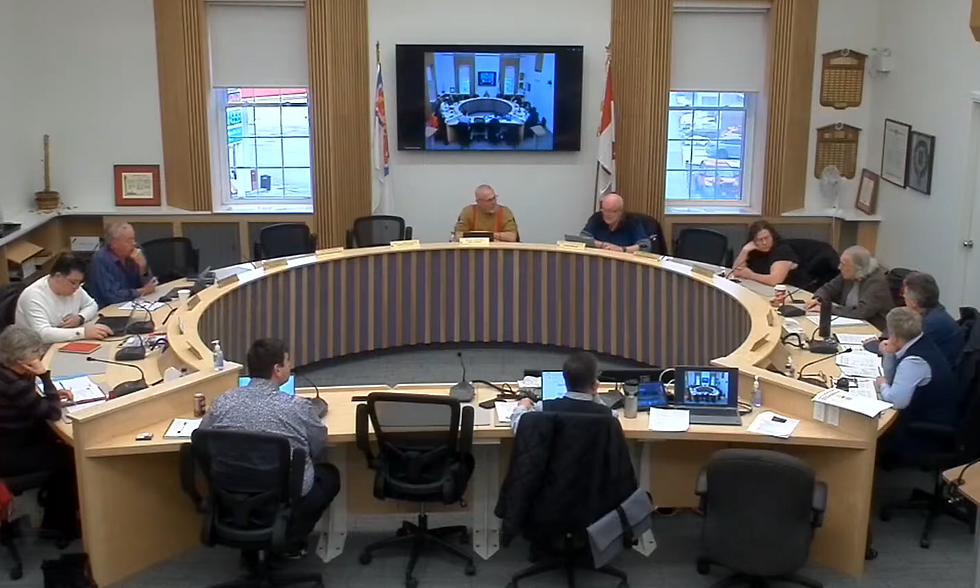
View the entire PEC Council Meeting; or view our recap.
Financial Report Where the Real Debate Happened
The most detailed discussion of the meeting centered on the 2026 financial report.
The main motion was introduced by Councillor John Hirsch, covering approval of the administrative budget, repayment of the CMHC seed funding loan, reimbursement of municipal administrative costs, and a future review of investment accounts.
Hilary Spriggs raised the strongest concerns early. She repeatedly stated that new board members did not yet have enough information to responsibly advise on finances, particularly around how money moves between the housing corporation and the municipality. She emphasized that understanding account types, transfers, and past practices was essential before future decisions could be made.
Albert Paschkowiak, Environmental Services and Sustainability Supervisor, supported this view and described the financial structure as simple on paper but difficult to understand in practice. He suggested bringing in finance staff to walk board members through the full picture.
That suggestion became formal when Hilary Spriggs proposed an amendment requesting a finance department presentation. Albert Paschkowiak seconded it. The amendment passed unanimously.
Despite the concerns, the board ultimately approved the full financial motion as amended. No members voted against it.

On audit costs, Councillor Phil St.-Jean openly questioned whether the corporation was overpaying given its limited activity. Adam Goheen, speaking on behalf of staff, explained that the audit cost is part of a county wide contract and cannot be renegotiated short term. Councillor John Hirsch acknowledged the lack of flexibility but expressed hope that future projects would make the cost feel more justified.
When it came time to confirm staggered board terms, there was little disagreement. Based on alphabetical order, Ted Elborn and Hilary Spriggs were elected to two year terms. Penny Morris and Mark Guslitz were elected to three year terms. The motion passed unanimously with no objections or abstentions.
Disraeli Street Where Positions Became Clear
Discussion around Disraeli Street revealed the most individual viewpoints.
Councillor Phil St.-Jean consistently pressed for momentum. He stressed the importance of keeping timelines moving and avoiding unnecessary delays while still following proper process.
Councillor John Hirsch strongly supported moving quickly and cautioned against getting lost in details that could slow the project. He stated clearly that he wants to see the project completed in 2026.
Albert Paschkowiak raised procedural cautions, particularly around working group size, quorum, and planning approvals. He urged the group to stay small and efficient to avoid scheduling problems.

Hilary Spriggs took a more cautious and technical approach. She raised repeated concerns about timelines, contracts, utility metering, and whether the Theberge schedule realistically accounted for municipal approvals and financing steps. She also questioned how utility costs would be handled between market and affordable units and warned against unintentionally subsidizing market rents.
Mark Guslitz focused on the need to support staff and acknowledged that this is the corporation’s first major project. He emphasized that early work done here will shape how future projects proceed.
Penny Morris asked direct questions about federal support and timelines, including whether meaningful progress had been made with the local MP and how quickly funding applications could realistically move.
Staff responses, led by Elis Ziegler and Adam Goheen, repeatedly reinforced that many documents are still placeholders, that funding applications are underway but not confirmed, and that the Disraeli working group is meant to resolve these details before recommendations return to the full board. All Disraeli related motions were carried unanimously.
What it means for the locals
For residents, especially those waiting for affordable housing, the meeting made one thing clear. The Disraeli Street project is real and moving forward, but it is not simple or guaranteed on a fixed timeline.
Board members broadly agree on the goal and support the project, but they differ in how much risk and uncertainty they are comfortable accepting in the short term. Some want speed, others want stronger safeguards before commitments are made.
What locals should take away is that progress is happening behind the scenes, but funding, approvals, and contracts still need to line up. The board is trying to balance urgency with responsibility, knowing that expectations are high and delays are frustrating, but missteps would be far worse.
Disclaimer: This article is based on a meeting with an approximate duration of 2:05:35. Due to the length of the meeting, our team was not able to independently review the full recording in its entirety. As a result, we relied on software-generated transcription, automated summarization, and automated recognition of speakers and participants, which may not be entirely accurate. All transcriptions, summaries, and related content are prepared by our team in good faith and on a reasonable best-efforts basis. The content is provided for general informational purposes only and is intended to support public understanding of the topics discussed. While reasonable efforts have been made to present the information accurately, automated processes may result in errors, omissions, or unintended misinterpretations. This article does not constitute an official, certified, or verbatim record of the meeting, and it should not be relied upon as such. Readers are encouraged to consult original source materials, official minutes, or recordings where available for confirmation or clarification. Questions, requests for clarification, or suggested corrections may be submitted to hello@pecconnect.ca for review and consideration.


Comments