
Part 1 : Affordable Housing Finances, Disraeli Project Plans, and Governance Steps – 01/12/2026
- PECConnect
- Jan 12
- 5 min read
The Prince Edward County Affordable Housing Corporation Board met on January 12, 2026, at Shire Hall in Picton for its first meeting of the year. The meeting was chaired by Councillor Phil St Jean, who serves as Chair of the Affordable Housing Corporation Board. With no public attendance and no deputations, the meeting focused on internal governance, finances, and advancing the County’s first major affordable housing project.
After confirming the agenda and adopting the December 8 and December 18, 2025 minutes, the board moved quickly into its main business. Much of the meeting centred on how the corporation operates financially and how close the Disraeli Street project is to moving from planning to construction.
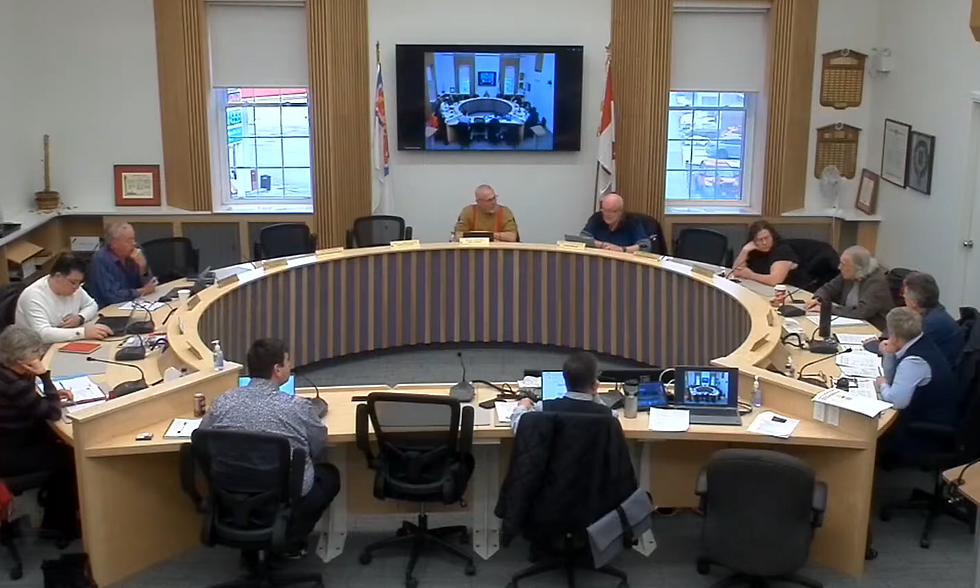
View the entire PEC Council meeting, or continue to speaker comments and councillor votes.
Board Business and Early Direction
Early in the meeting, St.-Jean flagged an upcoming site visit to Ottawa to tour a Theberge Construction modular housing project. The visit was described as a key opportunity for board members to see a completed modular build before making further decisions about Disraeli Street.
With no presentations, deputations, or public comments, the board moved directly to the January Action Tracker, which was received without debate. This item set the stage for a longer discussion on finances, governance, and project readiness.
Financial Report Brings Questions to the Surface
The most detailed early discussion came under HC-01-2026 Financial Report. The staff report included approval of the 2026 administrative budget, repayment of the CMHC seed funding loan, reimbursement of municipal administrative costs, and a future review of the corporation’s investment accounts.
Staff explained that the Affordable Housing Corporation budget is completely separate from the municipal operating budget. At this stage, the corporation does not generate revenue and relies on cash reserves and interest income. Certain operating costs, including audit and legal expenses, are initially carried by the municipality and later reimbursed by the corporation.
Several board members raised concerns about the level of detail provided, particularly for new board members. Questions focused on how money flows between the corporation and the municipality, what bank and investment accounts exist, and how specific amounts such as the municipal reimbursement were calculated.
A recurring theme was the need for clearer explanations, not just totals. Members asked for plain language notes explaining what each account is used for and how transfers work in practice.
Finance Education Identified as a Priority
As discussion continued, multiple members noted that while the structure may be simple on paper, it is difficult to understand without context. There was broad agreement that a clearer explanation of the financial relationship between the County and the Housing Corporation would help future decision making.

This resulted in an amendment requesting that finance department staff attend a future meeting to walk the board through the corporation’s finances, bank accounts, and investment structure. The amendment was approved, and the financial motion then carried as amended.
The board also discussed audit costs, which are set through a county wide audit contract. Staff confirmed the corporation is committed to the contract for the next several years, with audit costs rising over time. While some members questioned whether the cost reflects the corporation’s current activity level, staff confirmed there is limited flexibility until the contract expires.
Formalizing Board Term Lengths
Under Board Staggered Terms Confirmation, staff explained that the bylaws require a mix of two year and three year terms to ensure continuity. The bylaws do not set a maximum length of service.
To formalize staggering, the board approved two year terms for Ted Elborn and Hilary Spriggs, and three year terms for Penny Morris and Mark Guslitz. The motion passed without opposition.
Disraeli Street Becomes the Focus

The final major agenda item addressed Disraeli Street, the County’s first planned affordable housing build. The board approved the Disraeli Project Working Group Terms of Reference, received the Theberge Construction proposal, and received a draft ACLP pro forma prepared using CMHC financing tools. Staff emphasized that much of the material was preliminary. The intent was to ensure everyone was working from the same information before the working group begins a detailed review.
The Theberge proposal outlines a modular construction timeline of approximately 32 weeks to occupancy, assuming an early start. While described as achievable, members noted the timeline represents an ideal scenario and does not yet account for planning approvals, site servicing, or financing conditions.
Balancing Ambition With Reality
Board members raised questions about site servicing, planning approvals, utilities, and whether the proposed schedule realistically reflects municipal processes. Staff advised that zoning should not be an issue if the building layout remains consistent, though site plan approval and utility coordination will still require careful timing.
There was also extended discussion around utility metering, operating costs, and how market units and affordable units should be treated differently to avoid unintended subsidies.
Funding remained a major uncertainty. While applications to CMHC are underway and discussions continue with Build Canada Homes, no external funding has been confirmed. Members acknowledged that without additional funding, not all units can meet deeper affordability targets.
Clarifying the Role of the Working Group
Throughout the Disraeli discussion, St.-Jean repeatedly clarified the role of the working group. It is meant to gather information, identify risks, and bring recommendations back to the full board. It does not have decision making authority.
Members agreed the working group should focus on risk identification, timeline realism, and financial assumptions, while avoiding operational decisions.
All motions related to Disraeli Street were carried, allowing the working group to formally begin its work.
Key Takeaways
The Affordable Housing Corporation is still building its internal foundation, with a strong focus on financial clarity and governance.
The Disraeli Street project is moving forward, but timelines discussed publicly should be understood as targets, not guarantees, with funding and approvals still unresolved.
The board is actively seeking provincial and federal support to make affordable housing projects viable in the County, recognizing that local solutions alone are not enough.
The board’s next meeting is scheduled for February 9, 2026.
Disclaimer: This article is based on a meeting with an approximate duration of 2:05:35. Due to the length of the meeting, our team was not able to independently review the full recording in its entirety. As a result, we relied on software-generated transcription, automated summarization, and automated recognition of speakers and participants, which may not be entirely accurate. All transcriptions, summaries, and related content are prepared by our team in good faith and on a reasonable best-efforts basis. The content is provided for general informational purposes only and is intended to support public understanding of the topics discussed. While reasonable efforts have been made to present the information accurately, automated processes may result in errors, omissions, or unintended misinterpretations. This article does not constitute an official, certified, or verbatim record of the meeting, and it should not be relied upon as such. Readers are encouraged to consult original source materials, official minutes, or recordings where available for confirmation or clarification. Questions, requests for clarification, or suggested corrections may be submitted to hello@pecconnect.ca for review and consideration.


Comments