
Part 1: Farmland Protection, Bill 21, and Planning Pressure Took Centre Stage - 10/27/2025
- PECConnect
- Oct 27, 2025
- 4 min read
Updated: Jun 18
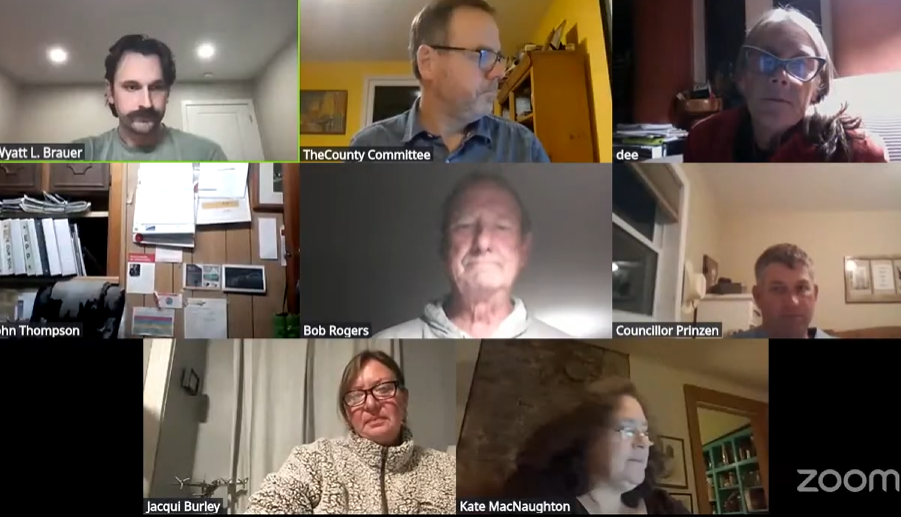
The Agricultural Advisory Committee met on October 27, 2025 to review a mix of presentations, policy items, and planning applications connected to farming in the County. The agenda moved from a deputation on farmland protection to discussions on provincial legislation and several development-related files affecting agricultural land.
Throughout the meeting, members focused on how farmland is being used, protected, and impacted by ongoing changes across the County. The sections below walk through what was presented, what was discussed, and the decisions the committee made during the meeting.
View the entire PEC Council meeting, or continue for speaker comments and councillor votes >
Ontario Farmland Trust deputation
Jenna Salvatore (Eastern Ontario Farmland Protection Coordinator, Ontario Farmland Trust) presented on how the Trust protects farmland and how it could support Prince Edward County’s agricultural priorities.

Key points she shared (important numbers and local relevance) Ontario is losing farmland at a rapid pace, and she emphasized the broader trend while also pointing to local change in the County. She highlighted that the County has experienced measurable declines in cropland and overall farmland across the 2011–2021 period, and stressed that land values have increased sharply, creating barriers for new farmers.
She explained the Ontario Farmland Trust model, including farmland conservation easements, which are registered on title and continue to apply to future owners. These agreements are designed to protect farmland permanently by limiting non farm uses while still allowing normal farming practices. She also noted that easements can involve tax benefits and that OFT covers most costs, with farmers typically paying for their own legal and financial advice.
She stated that seven parcels in the County are already protected through OFT, with additional parcels in progress. This was presented as a growing cluster approach to create stronger long term farmland protection. The deputation was formally received by motion.
Bill 21 Protect Our Food Act
The committee discussed Bill 21 Protect Our Food Act, 2025, with Councillor Kate MacNaughton sharing draft resolution language on screen. Paulina Szlachta, Chair of the Environmental Advisory Committee, joined this portion to explain that the Environmental Advisory Committee was waiting for Agriculture Advisory guidance and would support the approach. She suggested adding a local statistic discussed in the deputation to strengthen the “whereas” clauses.

The committee agreed with the draft direction, made small wording notes, and passed a motion supporting Bill 21 and urging stronger protection of farmland. The intent was that the resolution would go to County Council first, and then be forwarded onward through the formal process.
Planning file endorsements and concerns
Planning-related items prompted discussion around farmland impact and long term land use pressures. For the Z24-24 zoning bylaw amendment at 3131 Victoria Road in Ameliasburgh, the committee raised concerns about compatibility within a livestock intensive area, as well as the cumulative effects of event venues, expanded parking, and related uses. The committee endorsed the Planning Working Group submission by motion.
A longer discussion followed for applications B23-25 and Z4-25 involving Fair Acres Farms Limited in Bloomfield Hollow, where members expressed concern that a proposed lot line adjustment could function similarly to a severance, particularly in how it may gradually reduce prime farmland over time. Planning staff clarified that no new lots were being created and that the intent was farmland consolidation, but committee members emphasized the need to address these types of concerns earlier in the planning process. The item was ultimately received, with the Chair indicating that additional written comments would be submitted to the public record.
The committee also reviewed its ongoing work plan, with members stressing the importance of continuing to monitor farmland loss and maintaining momentum on existing priorities rather than removing them. Progress on agricultural mental health supports was noted as an area of continued attention and uptake. The work plan was received by motion. Looking ahead to 2026, the committee was informed that meetings would be front loaded due to the election year schedule, with sessions planned for January through April and the option for additional meetings if required. The proposed schedule was received by the committee.
What it means for the residents
The meeting reflects continued focus on protecting farmland in the County, both through policy advocacy such as support for Bill 21 and through tools like conservation easements that are already being applied locally. At the same time, discussions around planning applications highlight ongoing concerns about how incremental land use changes can affect agricultural land over time, particularly in areas with active farming operations.
There is also a clear emphasis on maintaining long term priorities, including farmland protection and farmer well being, while adapting to broader changes such as rising land costs and development pressure. The direction taken at this meeting suggests that these issues will continue to be monitored closely as they move through Council and future planning decisions.
Disclaimer: This article is based on a meeting with an approximate duration of 1:04:39. Due to the length of the meeting, our team was not able to independently review the full recording in its entirety. As a result, we relied on software-generated transcription, automated summarization, and automated recognition of speakers and participants, which may not be entirely accurate. All transcriptions, summaries, and related content are prepared by our team in good faith and on a reasonable best-efforts basis. The content is provided for general informational purposes only and is intended to support public understanding of the topics discussed. While reasonable efforts have been made to present the information accurately, automated processes may result in errors, omissions, or unintended misinterpretations. This article does not constitute an official, certified, or verbatim record of the meeting, and it should not be relied upon as such. Readers are encouraged to consult original source materials, official minutes, or recordings where available for confirmation or clarification. Questions, requests for clarification, or suggested corrections may be submitted to hello@pecconnect.ca for review and consideration.


Comments