
Part 1: Council Weighs Dark Sky Protection, Public Safety Upgrades, and Long-Term Asset Costs - 10/09/2025
- PECConnect
- Oct 9, 2025
- 4 min read
Dark Sky Preserve Proposal for the South Shore
A large portion of the meeting focused on a proposal to explore a Dark Sky Preserve designation for the South Shore of Prince Edward County. The idea was presented by Stephen Burr from the South Shore Joint Initiative and the Royal Astronomical Society of Canada. The proposal outlined how light pollution has increased over time and how protecting darker skies could support wildlife, biodiversity, education, and tourism.

View the entire PEC Council meeting, or continue for speaker comments and councillor votes>
Council heard that the South Shore has shifted from a Bortle Class II to Class III night sky, meaning it is already losing darkness. The proposal emphasized reducing light pollution through better lighting practices rather than stopping development or restricting land use. The ask was not for immediate changes but for staff to explore options, including lighting guidelines, municipal leadership, and potential partnerships.
Council members asked detailed questions about costs, enforcement, property rights, and timelines. Several councillors stressed that this would be a long-term project, potentially spanning a decade, and not an overnight transformation. Concerns were raised about replacing existing streetlights, enforcement challenges, and whether the designation would limit residents or recreational use.
In the end, Council approved a motion directing staff to explore opportunities to support a dark sky preserve and report back with recommendations. This was explicitly framed as information-gathering, not implementation.
Fire Department Radio Communications
Council then moved into a critical public safety discussion around the Fire Department radio communication system. Staff explained that the current system includes obsolete equipment no longer supported by manufacturers, creating serious risk if failures occur during emergencies.
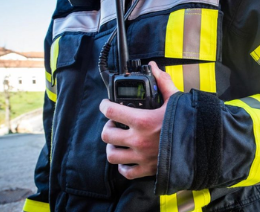
The Fire Chief described the radio system as a firefighter’s lifeline, comparing it to breathing air or water supply during a fire. Council learned there have already been multiple system failures, loss of redundancy, and real operational impacts. The proposal was to include funding requests in the 2026 budget for a managed radio communications system and a new tower to improve coverage and reliability. This was not an approval of spending yet, but direction to include it in budget deliberations.
Most councillors agreed the system needs upgrading. Questions focused on tower locations, costs, shared infrastructure, and long-term flexibility. Council ultimately supported moving the item forward to the budget process.
Fees and Charges for 2026
Another lengthy discussion centered on the 2026 Fees and Charges By-law, especially proposed increases to town hall rental rates. Some councillors were concerned about a 25 percent increase, particularly for rural halls that serve as key community gathering spaces.
Staff clarified that community groups and non-profits already receive free or near-free access, and the increase would mainly affect private or for-profit rentals like weddings or private events. Comparisons showed County rates remain well below neighboring municipalities. An amendment was proposed to remove the increase, but Council voted it down. The main motion to approve the fees as presented passed.
The Asset Management Plan and the County’s Financial Future
The most consequential item of the day was the presentation of the Final Consolidated Asset Management Plan. Staff described it as years in the making and foundational to how the County plans, budgets, and makes decisions moving forward.
Council learned the County manages approximately 1.3 billion dollars in assets excluding water and wastewater systems. Over the next ten years, projected lifecycle costs total nearly 587 million dollars, with a significant funding gap if current spending patterns continue.
The plan does not raise taxes on its own but outlines what it would take to maintain assets responsibly. It also highlights the need for difficult choices around service levels, facilities, and long-term affordability. Council members repeatedly stressed that this plan affects not just this Council, but the next two Councils as well.
Council voted to adopt the Asset Management Plan, commit to annual reporting, and integrate it into future budget decisions.
Disclaimer: This article is based on a meeting with an approximate duration of 3:17:003. Due to the length of the meeting, our team was not able to independently review the full recording in its entirety. As a result, we relied on software-generated transcription, automated summarization, and automated recognition of speakers and participants, which may not be entirely accurate. All transcriptions, summaries, and related content are prepared by our team in good faith and on a reasonable best-efforts basis. The content is provided for general informational purposes only and is intended to support public understanding of the topics discussed. While reasonable efforts have been made to present the information accurately, automated processes may result in errors, omissions, or unintended misinterpretations. This article does not constitute an official, certified, or verbatim record of the meeting, and it should not be relied upon as such. Readers are encouraged to consult original source materials, official minutes, or recordings where available for confirmation or clarification. Questions, requests for clarification, or suggested corrections may be submitted to hello@pecconnect.ca for review and consideration.


Comments