
Part 2: How Councillors Represented Their Communities on Parks, Water, and Services - 11/13/2025
- PECConnect
- Nov 13, 2025
- 4 min read
The meeting was chaired by Phil St Jean, Councillor for Wellington. Throughout the meeting St Jean played an active role not only chairing but also questioning staff challenging assumptions and bringing forward motions. His comments consistently focused on cost control fairness between communities and making sure policies work in real world conditions rather than just on paper.
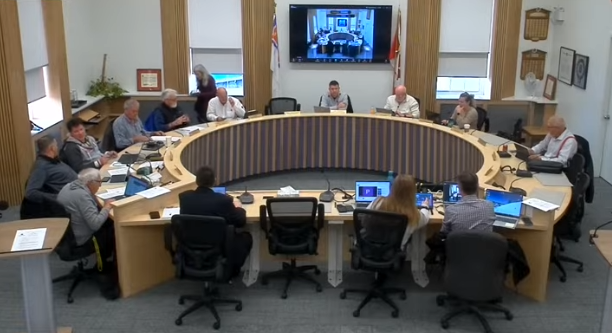
View the entire PEC Council Meeting; or view our recap >
Parks and Recreation Master Plan voices
Support for the Parks and Recreation Master Plan was broad across Council but came with different emphases depending on ward.
Steve Ferguson, Mayor of Prince Edward County, spoke strongly in favour of the plan. He framed it as a long overdue guiding document and emphasized its importance for future councils. His comments focused on continuity and long term planning rather than specific neighbourhood impacts.
Phil St Jean supported the plan but was more critical in tone. He questioned language in the report that suggested inconsistent service delivery and pushed back on the idea that the County had been poorly managed in the past. He later introduced and supported a motion to accelerate reviews of underused parkland and potential surplus properties.
Albert Paschkowiak, speaking from a South Marysburgh perspective, supported the plan and highlighted the reality that many recreation committees already operate beyond their formal mandates. He also questioned whether demographic assumptions about an aging population still reflect current conditions.
Janice Maynard, representing a largely rural ward, focused on flexibility and rural equity. She repeatedly raised concerns about ensuring smaller communities and scattered villages are not overshadowed by larger hubs like Picton and Wellington. She also questioned how representative public consultation really is when participation rates are low.
McNaughton and Hirsch emphasized accessibility collaboration with school boards and practical implementation details rather than big picture vision. The amended motion to move recommendations 46 and 47 into a shorter timeline was supported by a majority of Council and carried.
Water and wastewater allocation policy positions

The EV800 Water and Wastewater Capacity Allocation Policy prompted careful scrutiny. Dorothy Bothwell, speaking as a member of the public, raised the most detailed concerns. Her comments focused on governance authority legal consistency and Wellington specific development charges. Her intervention clearly shaped the discussion that followed.
Phil St Jean and McNaughton both pressed staff on who ultimately controls allocation decisions and how Council stays informed when authority is delegated. Albert Paschkowiak supported the policy direction but asked whether future changes to development charges would require further amendments. Pinnell spoke from a Wellington and employment lens, stressing frustration with water capacity being tied up while potential job creating projects wait. The motion to receive and approve the updated policy carried, with staff directed to refine language and return with clarifications at the next Council meeting.
Sidewalk plowing produced the most geographically specific debate.
Janice Maynard raised concerns specific to Consecon, asking whether routes could be adjusted to better reflect walking patterns near the library and village core. She supported a targeted review rather than broad service expansion. Her motion did not carry. McNaughton raised issues in Picton, including Hill Street and East Mary Street, pointing out safety concerns where sidewalks exist but are not plowed. Motions related to these areas were defeated.

Nyman focused on overall efficiency and costs, questioning whether lightly used sidewalks should continue to receive full service and whether brine could reduce salt and sand use. His motion to direct a broader assessment of sidewalk use did not pass.
Prinsen and Pinnell cautioned strongly against expanding sidewalk service, citing limited equipment staff and rising costs tied to new subdivisions.
In the end Council voted to receive the sidewalk report for information only, leaving service levels unchanged.
Taxi and vehicle for hire bylaw positions
The Taxi and Vehicle for Hire By law received general support but also close scrutiny.
Sarah, legal staff, presented the update and emphasized fairness consistency and enforcement. Phil St Jean asked detailed questions about wine tours driver for hire services and vehicle identification. He stressed the need for visible licensing so residents can distinguish legal operators from unlicensed ones.
Albert Paschkowiak asked whether ride sharing companies like U Ride had been consulted and supported alignment with neighboring municipalities. Nyman flagged inconsistencies in the proposed fare schedule and requested further consultation with taxi operators before final approval.
Council supported an amendment to correct fare discrepancies and consult further. The amended motion carried, followed by approval of the main bylaw motion as amended.
What this means for residents across the County
For residents in Picton and Wellington, decisions on parks planning water allocation and taxi regulation signal tighter management of growth and clearer rules for services tied to tourism and development. For smaller villages and rural hamlets, the sidewalk debate shows Council remains cautious about expanding services without clear data and resources. Overall the meeting showed Council balancing long term planning with immediate operational limits while different councillors consistently advocated for the specific needs and realities of their own communities.
Disclaimer: This article is based on a meeting with an approximate duration of 3:22:04. Due to the length of the meeting, our team was not able to independently review the full recording in its entirety. As a result, we relied on software-generated transcription, automated summarization, and automated recognition of speakers and participants, which may not be entirely accurate. All transcriptions, summaries, and related content are prepared by our team in good faith and on a reasonable best-efforts basis. The content is provided for general informational purposes only and is intended to support public understanding of the topics discussed. While reasonable efforts have been made to present the information accurately, automated processes may result in errors, omissions, or unintended misinterpretations. This article does not constitute an official, certified, or verbatim record of the meeting, and it should not be relied upon as such. Readers are encouraged to consult original source materials, official minutes, or recordings where available for confirmation or clarification. Questions, requests for clarification, or suggested corrections may be submitted to hello@pecconnect.ca for review and consideration.


Comments