
Part 1: Parks Planning, Water Capacity, and Service Limits Dominated Committee of the Whole - 11/13/2025
- PECConnect
- Nov 13, 2025
- 5 min read
The Committee of the Whole met on November 13, 2025, to review several major policy and planning items that will shape how the County manages parks and recreation, water and wastewater capacity, sidewalk winter maintenance, and vehicle-for-hire regulation. While no decisions were final at this stage, the meeting set clear direction ahead of the November 25 Council meeting where motions may be formally adopted.
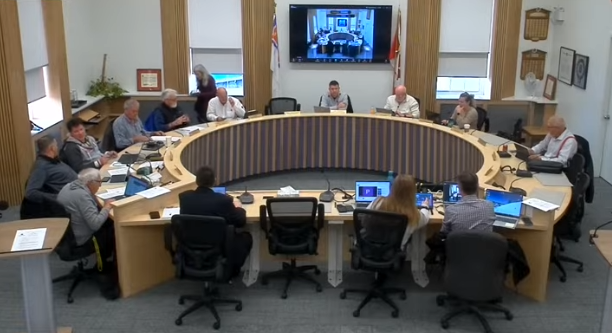
View the entire PEC Council meeting, or continue for speaker comments and councillor votes >
Councillor Phil St-Jean opened the meeting by outlining procedural reminders, including that all recommendations before Committee remain subject to Council approval. He also confirmed that the meeting was being live streamed and that public participation would form part of the official record.
Early in the meeting, Councillor Sam Grosso declared a pecuniary interest related to the Taxi By-law Update, noting his ownership of a local touring business. This disclosure removed him from participation on that specific item. Before moving into agenda business, Councillor St-Jean shared community announcements focused on Picton events, including the Stone Soup event, the Picton Night Market, and the Indoor Harvest Market, emphasizing the importance of supporting local businesses during the shoulder season.
Water and Wastewater Capacity and Allocation Pressure
Public input began with a detailed deputation from Dorothy Bothwell, who addressed Agenda Item 6.2, the proposed EV800 Water and Wastewater Capacity Allocation Policy. Her comments raised concerns about who holds decision-making authority to revoke or amend servicing allocations, particularly when approvals are delegated to staff rather than Council.
She also highlighted inconsistencies between connection charges and area-specific development charges in Wellington, arguing that gaps in policy language could limit the County’s ability to reallocate unused water capacity at a time when supply is constrained. Bothwell urged Committee to send the policy back for refinement, noting the pending expiry of the Interim Control By-law and stressing that clarity is needed now, not later, to protect the County’s interests and ensure fairness across developments.
Parks and Recreation Master Plan Sets Long-Term Direction
The meeting then turned to one of its largest items, the Parks and Recreation Master Plan, presented by Lisa Sverson, Director of Recreation and Community Facilities, with support from consultant Jonathan Hack of Sierra Planning and Management. The plan was framed as the County’s first comprehensive parks and recreation strategy, designed to guide planning and investment over the next decade.
Sverson emphasized that the plan responds to changing demographics, aging infrastructure, and growing demand for inclusive and accessible recreation, while aligning with the County Strategic Plan, Asset Management Plan, and AODA standards. She outlined three central pillars: community recreation hubs, service delivery excellence, and parks and outdoor facilities, noting that several action items are already underway.
Committee members engaged in a wide-ranging discussion on the plan’s assumptions and implications. Questions were raised about population aging versus recent growth in younger families, the importance of accessibility features being embedded across all projects, and the need for continued public consultation as individual initiatives move forward.

Several councillors focused on rural service delivery, questioning how the plan ensures equitable access in a County that is largely rural with small, dispersed communities. Others stressed the importance of flexibility, warning against treating the master plan as a static document rather than a guiding framework that must evolve as needs change.
Committee ultimately supported receiving and endorsing the plan as a guiding document, while approving an amendment to prioritize the review of underused County-owned parkland and the development of a disposition policy sooner than originally proposed. This amendment reflected interest in accelerating decisions around surplus lands and aligning them with broader County objectives.
Attention then shifted back to water and wastewater capacity, where staff presented proposed amendments to the EV800 policy. The central change would allow the County to place time limits on servicing allocations, typically three years, to prevent unused capacity from sitting idle while other housing or employment projects are stalled.
Staff clarified that the policy is forward-looking, applying only to future allocations, and that it would give the County stronger tools to manage scarce infrastructure. Committee members discussed the importance of fairness, particularly in Wellington, where limited water capacity has constrained growth. There was broad agreement that the County needs mechanisms to reclaim unused allocations, though some councillors pushed for stronger language to ensure that capacity is reallocated consistently rather than at staff discretion.
Sidewalk Winter Maintenance and Service Constraints

The Sidewalk Winter Maintenance Program prompted one of the longest discussions of the afternoon. Councillors debated service levels, cost pressures, and the balance between accessibility and available resources. Several members raised site-specific concerns, including sidewalks in Consecon, Cherry Valley, Hill Street, and East Mary Street, pointing to safety issues, blind corners, and the needs of seniors and pedestrians.
Staff emphasized that sidewalk plowing is already stretched thin due to expanding subdivision infrastructure and limited equipment. While there was interest in reviewing routes and exploring efficiencies, multiple motions to adjust service levels or add new sidewalk segments failed, reflecting caution about expanding commitments without additional resources.
Taxi and Vehicle-for-Hire By-law Modernization
The final major item before closed session was the Taxi and Vehicle-for-Hire By-law Update. Staff outlined a modernized framework that introduces new categories such as Transportation Network Companies, updates fare schedules, strengthens enforcement tools, and improves vehicle identification requirements. The goal, according to staff, is to promote fairness, clarity, and consistency with neighboring municipalities while better protecting passengers and legitimate operators.

Committee supported advancing the updated by-law, with amendments directing staff to review fare consistency based on distance in consultation with taxi operators before final Council approval. The meeting concluded with a closed session related to labour relations, followed by approval of a new collective agreement with the County Professional Firefighters Association, passed on a recorded vote.
Overall, the November 13 Committee of the Whole meeting revealed a Council grappling with infrastructure limits, service expectations, and the challenge of planning for growth while managing costs. The discussions set the stage for key decisions later in November, particularly around recreation investment, water allocation, and regulatory modernization.
Disclaimer: This article is based on a meeting with an approximate duration of 3:22:04. Due to the length of the meeting, our team was not able to independently review the full recording in its entirety. As a result, we relied on software-generated transcription, automated summarization, and automated recognition of speakers and participants, which may not be entirely accurate. All transcriptions, summaries, and related content are prepared by our team in good faith and on a reasonable best-efforts basis. The content is provided for general informational purposes only and is intended to support public understanding of the topics discussed. While reasonable efforts have been made to present the information accurately, automated processes may result in errors, omissions, or unintended misinterpretations. This article does not constitute an official, certified, or verbatim record of the meeting, and it should not be relied upon as such. Readers are encouraged to consult original source materials, official minutes, or recordings where available for confirmation or clarification. Questions, requests for clarification, or suggested corrections may be submitted to hello@pecconnect.ca for review and consideration.


Comments