
Part 2: Votes, Public Health, and the QE School Divide at Council – 05/21/2024
- PECConnect
- May 21, 2024
- 4 min read
Mayor Steve Ferguson chaired the May 21 Regular Council meeting at Shire Hall, with all members present except Sam Branderhorst (Athol). Bill Roberts (Sophiasburgh) arrived just before the open session began.

View the entire PEC Council Meeting; or view our recap.
Beach water testing and the public health merger questions
Public health CEO and Medical Officer of Hastings Prince Edward Public Health Dr. Ethan Toumishey presented the 2024 approach to beach sampling and gave a verbal update on the proposed regional public health merger work.
The biggest thread from Council was risk communication. Janice Maynard (Ameliasburgh) pressed on the two types of beach signs, and whether messaging could end up scaring people away from generally safe water. Maynard raised Roblin Lake as an example where a rare positive test had a specific cause, and asked how to keep the tone proportional.
Bill Roberts (Sophiasburgh) focused on governance: how municipalities with specific local public health needs would stay meaningfully connected if a new Southeast health unit has fewer board seats for Prince Edward County. Toumishey responded by pointing to continued representation and staff level connections as part of the structure, even as the merger process unfolds over years.
Phil St-Jean (Picton) framed the sampling change as data driven and publicly said he was not upset by the reduced frequency. St-Jean questioned whether warning signage was truly necessary at places that function more like boat launches, and then pushed for a practical fix: adding a QR code so people can see the context behind a sign quickly.
Community Living’s message and Council’s focus
Community Living Prince Edward deputants Johanne Strome and Roxanne Bird described their services, partnerships, and the practical pressures facing the developmental services sector. Bill Roberts zeroed in on staffing. Roberts asked for clarification around what they meant by workforce challenges, and Strome confirmed that recruitment and retention remain a serious barrier across the province, including locally.
The tone around this deputation stayed supportive and straightforward, with Council receiving the deputation after brief questions.
Footpath project support, plus conflict questions
South Shore Joint Initiative deputants Joe Dale and Geoff Craig pitched a walking only South Shore Footpath Project, aiming for a Point Peter to Point Traverse route, built in phases and based on landowner permission.
Chris Braney (Hillier) asked the “what can Council do right now” question. Dale’s answer was clear: not money at this stage, but soft supports like awareness, future permissions for markers on public infrastructure, and eventual promotion when ready.
St-Jean’s questions focused on potential conflicts. He asked how the project would avoid safety issues where motorized trails, hunters, and other users are already active, especially around Monarch Point. Dale and Craig pointed to the province’s management planning process and the likelihood of separating walking routes from ATV routes over time, and noted that closures or reroutes during hunting seasons are a normal safety tool.
Kate MacNaughton (Picton) asked about accessibility. Dale acknowledged it is on the team’s radar but not yet designed, while Craig pointed to parts of the route, particularly within the federal National Wildlife Area, where accessibility is already being considered within existing planning.
Long term care and municipal safeguards: What moved forward, and who drove it
In public comment, resident John Ambrose urged Council to keep pushing for net zero energy design ideas for the H.J. McFarland project. MacNaughton responded from the table, saying she supports thermal exchange and heat pump efficiency, then asked whether Ambrose could estimate upfront costs based on available specs. Ambrose described a financing concept that included geothermal wells, solar panels, and possible federal support mechanisms.
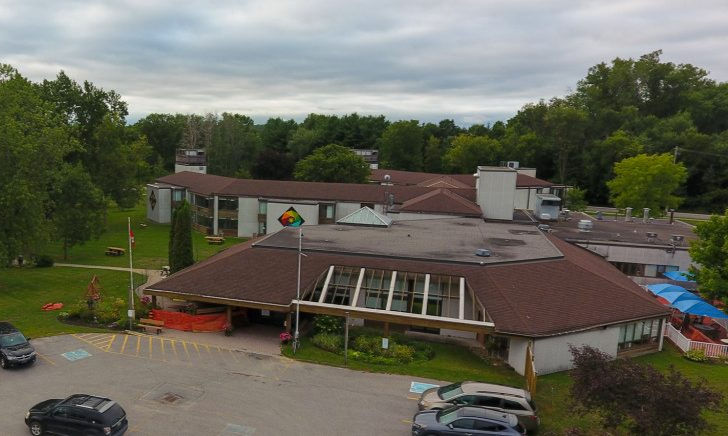
On the formal decision side, St-Jean moved the motion directing the Mayor and CAO to enter into the long term care development agreement tied to provincial grant milestones for the H.J. McFarland Memorial Home rebuild, with Roy Pennell (Ameliasburgh) seconding. Staff confirmed this step was needed to secure the next milestone by May 31.
For video surveillance, Corey Engelsdorfer (Wellington) and MacNaughton moved the motion to receive the report and approve the municipal policy. MacNaughton thanked staff for a “necessary not wanted” approach. Maynard asked for tight clarification that surveillance is limited to safety and security purposes and must follow a defined threshold and privacy impact process.
Vote on the former Queen Elizabeth School bylaw
The most clearly split decision came under the bylaw authorizing the agreement of purchase and sale for the former Queen Elizabeth School property in Picton. Council held a recorded vote and the bylaw carried 8 to 5.
In favour were Phil St-Jean, John Hirsch, Kate MacNaughton, Janice Maynard, Sam Grosso, Brad Nieman, Bill Roberts, and Mayor Steve Ferguson.
Opposed were David Harrison, Roy Pennell, Corey Engelsdorfer, Chris Braney, and Phil Prinzen. Sam Branderhorst was absent.
What this means for residents
In Picton, the QE School bylaw vote shows where Council lines currently sit on the redevelopment direction, and residents should expect the next practical questions to land on the promised follow up report about tenancy and financing details.
Along the South Shore, the footpath pitch is moving into a public launch phase, with Council broadly receptive but openly alert to safety, hunting seasons, and potential conflicts with existing motorized use in provincially managed areas.
Across the whole County, the beach sampling shift and the merger discussion both landed on the same local concern: people still want clear, trustworthy information that feels specific to PEC, especially when decisions are made using regional data, provincial standards, and delayed lab reporting.
Disclaimer: This article is based on a meeting with an approximate duration of 2:08:03. Due to the length of the meeting, our team was not able to independently review the full recording in its entirety. As a result, we relied on software-generated transcription, automated summarization, and automated recognition of speakers and participants, which may not be entirely accurate. All transcriptions, summaries, and related content are prepared by our team in good faith and on a reasonable best-efforts basis. The content is provided for general informational purposes only and is intended to support public understanding of the topics discussed. While reasonable efforts have been made to present the information accurately, automated processes may result in errors, omissions, or unintended misinterpretations. This article does not constitute an official, certified, or verbatim record of the meeting, and it should not be relied upon as such. Readers are encouraged to consult original source materials, official minutes, or recordings where available for confirmation or clarification. Questions, requests for clarification, or suggested corrections may be submitted to hello@pecconnect.ca for review and consideration.


Comments