
Part 1: Focused on Three Severances, and a Bigger Question About How PEC Protects Affordable Housing Plans - 10/18/2023
- PECConnect
- Oct 18, 2023
- 7 min read
The County’s Planning and Development Committee met on October 18, 2023, as a hybrid public meeting held in Council Chambers at Shire Hall and on Zoom. The meeting was held under the Planning Act, which is why the format stayed tightly focused on specific planning files and why the public was reminded that comments made during the meeting become part of the public record. Councillor Corey Engelsdorfer chaired the meeting.
After confirming the agenda, the committee moved into the statutory public meeting portion, where three consent applications were scheduled. Unlike many planning meetings where some items slide quietly through as a bundled consent agenda, this one ended up with no consent items at all. Each file was pulled into full discussion because applicants wanted to speak or because council had questions.

View the entire PEC Council meeting, or continue to speaker comments and councillor votes>
Pinecrest Housing at 27 Corey Street and the Question of Keeping Land for Affordable Housing
The first major discussion centred on a severance request tied to Pinecrest Housing, a project some residents may recognize by its earlier public-facing name, Lovesong Seniors Housing and Community Hub. John Uings, Treasurer and board member with Pinecrest Housing, addressed the committee alongside Andy Spry, described as a construction and planning expert with partner Springdale Development Inc.
Uings explained that Phase One involves converting the former Pinecrest School building into about 55 studio units, described as affordable using the County’s own data and rules. The committee heard that the project’s biggest challenge has been the slow pace of federal funding approvals through CMHC, which Uings said had taken roughly two years and still was not finalized. In that context, the reason for the severance was presented as practical and funding-driven, not a signal that the overall project was changing. Uings told council that CMHC wanted the lot split so that funding for the school conversion would be secured only against the land connected to that building, rather than against the entire larger property. That would leave the remaining land available for future phases, including the possibility of roughly 100 additional units south of the school in a later phase.
That explanation led directly into the committee’s main tension on this file: council members were generally supportive of affordable housing, but also wary of waiving fees or removing conditions without some way to protect the County’s interest long term.
Uings asked for two things. One was the removal of a condition related to payment in lieu of parkland dedication, suggesting that the vision for the broader site includes significant public green space and community elements like a walking track and garden. The second was a request for the County to waive severance-related fees, pointing to past commitments tied to the original agreement involving the property.
The discussion that followed had a clear theme. Councillors kept circling back to the same basic question: if conditions are eased now, how does the County ensure the land stays aligned with the affordable housing vision later?
Several ideas surfaced on how to keep some control. A one-foot reserve was discussed as a technical tool that could give the County leverage over access, because the County would have to lift the reserve before access is granted. Staff confirmed that approach could be used, but also clarified its limit: it would not stop land from being sold, it would only give the County the ability to control access.
Council also asked how much money was involved. Planner Emily Overholt confirmed the relevant fee amount discussed in the meeting was $2,091, with mention of a deposit that would be returned when the file is closed. The committee then moved through motions that reflected the direction of the room.
First, council voted to remove the parkland payment condition entirely. Then the committee voted to waive planning fees tied to the severance. Finally, the committee supported directing staff to review the existing agreement to add a new protection: the municipality having a first right of refusal on any sale of land. With those pieces in place, the committee approved the application as amended, keeping the project moving while also signaling that council wanted stronger safeguards around future land disposition.
390 Kelly Road and a Rare Moment of a File Nearly Being Pulled Mid-Meeting

The second file took a very different tone. It involved a consent and rezoning application at 390 Kelly Road in Athol, with Paul Johnson appearing as the applicant. Because Councillor Sam Branderhorst had declared a pecuniary interest due to owning property abutting the subject lands, Branderhorst did not participate in discussion or voting on this item.
Johnson’s comments were not a short pitch for a proposal. Instead, he gave the committee a long, personal account of how the application unfolded over time, starting in 2020, and how he believed requirements shifted during the process. He described applying after discussions with planning staff, paying fees, preparing materials, and then being told later that additional work would be required, including a hydrogeology study.
He framed the experience as goalposts moving, with delays stretching far beyond what he expected, and he connected those delays to changing financial conditions, including interest rates, which he said made the original plan no longer feasible. His message to council was blunt: he said he was withdrawing the application and would not agree to the listed conditions, and he asked whether any refunds might be possible.
Council asked Johnson how much he believed he had invested overall, and he estimated over $20,000 once professional work like surveys and studies were included. Councillors also asked whether this was his first severance application, and Johnson said he had done severances before.
From there, the committee moved into a tricky procedural moment. Council considered whether to reimburse fees associated with the application. Staff discussion clarified that while Johnson’s total personal costs included third-party professional expenses, the County-controlled portion was far smaller, and that staff time had still been spent processing and reporting on the file. A motion to reimburse the application fees and remaining deposit was put forward and ultimately failed.
At that point, the meeting could have simply ended the file, but the committee did not leave it there. With staff noting that the report itself recommended approval, and with some councillors expressing interest in understanding the issues more deeply, the committee briefly explored options like deferral or approving the application anyway.
In the end, council chose the cleanest procedural path available in the moment. The committee voted to approve the consent as recommended, but with one notable change: council supported removing a condition that would have required filtration and treatment of the property’s groundwater.
That removal was debated in plain language. One side argued that if professional hydrogeology input is required, then its recommendations should be respected, especially where issues like turbidity and coliform were mentioned. The other side emphasized that the water met ministry guidelines and that ongoing private water management is fundamentally a homeowner responsibility. The committee ultimately voted to remove the condition, then approved the main motion as amended.
South of 1668 County Road 19 and a Practical Debate About Driveway Safety and Trees
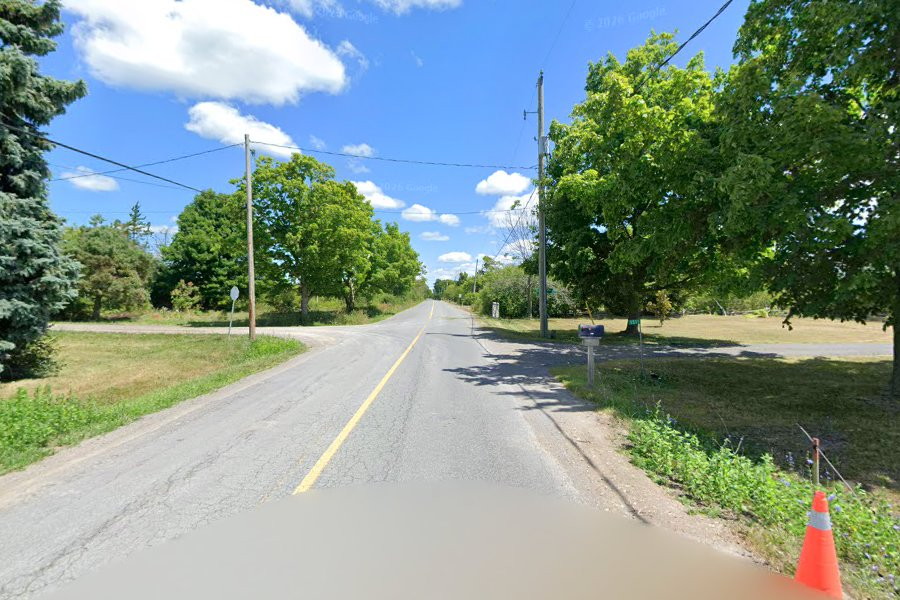
The third file involved Mark Kubista and Maran Stern-Kubista, with the lands described as south of 1668 County Road 19 in Ameliasburgh. The applicant, Mark Kubista, joined by Zoom and focused his comments on a single condition. Condition language would have required a mutual standard entrance shared between the severed and retained parcels. Kubista asked council to allow two separate entrances instead.
His reasons were practical and site-specific. He described the road segment as flat and straight, suggesting that adding a second entrance would not meaningfully increase collision risk compared to increasing traffic at a single shared entrance. He also raised environmental and neighbour impacts. He said the shared entrance location would mean removing healthy trees, which mattered to him after already losing many ash trees, and he described concerns about placing traffic closer to a neighbour across the road whose home sits near the roadway.
Council’s discussion stayed grounded in those specifics. Councillor Roy Pennell noted familiarity with the property and said leaving the existing entrance made sense as long as it could be brought up to current standards. The committee then moved into motion language, with staff suggesting a clear standard condition requiring that the owner obtain entrance permits and civic addressing for both lots and construct approved entrances.
Council voted to amend the condition to permit two separate entrances, then voted to approve the application as amended.
Closing the Meeting
With the three major applications handled, the committee received items approved under delegated authority for information and then adjourned the meeting at 8:22 p.m.
Key Takeaways
Even when council is broadly supportive of a goal like affordable housing, the meeting showed how quickly the conversation shifts to long-term safeguards, especially around land ownership, future phases, and what tools the County has to protect its interests.
Planning files can become messy when timelines stretch, requirements change, or applicants feel caught in process. The Kelly Road discussion highlighted how frustration can spill into the meeting itself, and how committee decisions can still move forward even when an applicant says they want to step away.
Small technical conditions, like entrance placement, parkland payments, or water treatment language, can become the main event because they shape real day-to-day impacts. In this meeting, those details decided what got waived, what got removed, and how each application was ultimately approved.
Disclaimer: This article is based on a meeting with an approximate duration of 1:23:46. Due to the length of the meeting, our team was not able to independently review the full recording in its entirety. As a result, we relied on software-generated transcription, automated summarization, and automated recognition of speakers and participants, which may not be entirely accurate. All transcriptions, summaries, and related content are prepared by our team in good faith and on a reasonable best-efforts basis. The content is provided for general informational purposes only and is intended to support public understanding of the topics discussed. While reasonable efforts have been made to present the information accurately, automated processes may result in errors, omissions, or unintended misinterpretations. This article does not constitute an official, certified, or verbatim record of the meeting, and it should not be relied upon as such. Readers are encouraged to consult original source materials, official minutes, or recordings where available for confirmation or clarification. Questions, requests for clarification, or suggested corrections may be submitted to hello@pecconnect.ca for review and consideration.


Comments