
Part 1: PEC Council Grapples with Taxes, Infrastructure, and Transparency in 2025 Budget Debate - 12/04/2024
- PECConnect
- Dec 4, 2024
- 7 min read
Prince Edward County Council spent multiple days working through the 2025 municipal budget in one of the most detailed and financially significant meetings of the year. Councillors reviewed department budgets line by line, debated spending priorities, questioned long-term financial planning, and examined how proposed decisions would affect both taxpayers and future municipal obligations.
The atmosphere throughout the meeting was cautious and at times visibly tense. Councillors repeatedly acknowledged the difficult position facing the municipality: residents are already struggling with inflation, housing costs, and economic uncertainty, while the County simultaneously faces mounting infrastructure pressures, operational demands, and long-term debt obligations.
Rather than moving quickly through approvals, council spent significant time debating where spending should be reduced, where future risks were being ignored, and how to balance immediate affordability with long-term financial responsibility.
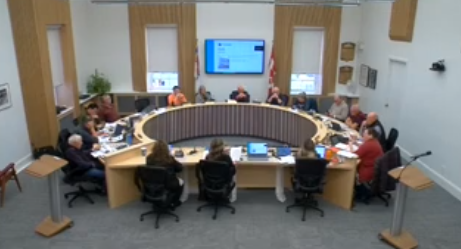
View the entire PEC Council meeting, or continue to speaker comments and councillor votes>
Tax Increases and Affordability Dominate the Discussion
One of the central themes of the meeting was concern over the size of the proposed tax increase and whether residents can realistically absorb additional financial pressure in 2025.
Several councillors pointed out that the projected tax increase was sitting above the rate of inflation, raising broader concerns about affordability for households already dealing with higher utility bills, food costs, housing expenses, and debt pressures.
The discussion repeatedly returned to whether council itself should demonstrate restraint before asking taxpayers to pay more. Some councillors argued that municipal government must lead by example and examine discretionary spending within its own operations before increasing the burden on residents.
Others warned that failing to invest adequately now could simply create larger infrastructure and service costs later, potentially leading to even sharper tax increases in future years. The debate highlighted a broader tension facing municipalities across Ontario as they attempt to maintain service levels while responding to growing public concern over affordability.
Technology and Public Access Become an Important Governance Issue
A surprisingly large portion of the meeting focused on technology support, meeting accessibility, and public transparency.
Councillors discussed ongoing concerns involving Zoom participation, livestream reliability, audio quality, and technical disruptions that have affected previous public meetings. There appeared to be broad agreement that accessible and reliable meeting technology is essential for maintaining public trust, particularly after recent criticism surrounding openness and accessibility within municipal governance.
Some councillors argued that in-person attendance should remain the preferred format whenever possible. However, most members acknowledged that virtual participation and technical support are now critical parts of modern municipal government and cannot simply be scaled back without consequences.
The discussion reflected increasing recognition that public expectations around accessibility, transparency, and digital participation have permanently changed since the pandemic era. For residents, these conversations matter because meeting accessibility directly affects how easily the public can follow council decisions, participate in discussions, and hold elected officials accountable.
Council and Mayor Budget Sparks Heated Debate
One of the more politically sensitive discussions involved the council and mayor budget, which became a flashpoint during deliberations.
The proposed budget showed increases tied primarily to professional development, contracted services, conference attendance, and technology support rather than salary growth. Even so, several councillors questioned whether some of those expenses could be reduced in order to keep overall budget growth closer to inflation.

Conference travel, training costs, and discretionary spending became particular areas of scrutiny. Some councillors argued that municipal leadership should be willing to scale back non-essential expenses during periods of financial pressure on residents.
Staff responded by explaining that many of the increased costs reflected normal fluctuations tied to conference schedules, election cycles, and real historical operating expenses rather than new benefits or unnecessary spending.
After extensive discussion, council passed a motion directing staff to internally identify reductions that would effectively cap growth within the council and mayor budget closer to inflationary levels.
Debate Emerges Over Professional Development and Conferences
The conversation around conferences and professional development evolved into a broader discussion about the value of training and networking for municipal leaders.
Some councillors defended conference attendance, arguing that these events provide valuable learning opportunities, policy insight, and networking that ultimately improve municipal decision-making. They stressed that conferences often allow councillors and staff to learn about emerging issues, funding opportunities, infrastructure strategies, and best practices from other municipalities.
Others questioned whether current financial conditions justify maintaining the same level of travel and conference participation. Some members suggested conference attendance should be reduced, scaled back, or more carefully prioritized until financial conditions improve.
While council did not make immediate changes to conference policies during the meeting, the discussion clearly signaled that future spending on professional development may face greater scrutiny moving forward.
Library and External Agency Budgets Sent for Further Review
External agency budgets also generated considerable discussion, particularly the library budget.
Councillors raised questions about how some budget increases had been calculated and whether temporary or one-time funding had inadvertently become embedded within long-term operating baselines. Because council does not directly control many external agency budgets, staff explained that councillors generally have three options: approve the budget as presented, reduce funding through a formal motion, or request additional clarification before making a decision.
Rather than immediately approving the library budget, council voted to place it in the “parking lot” for further review and clarification. The library board was directed to return with additional information explaining budget increases and funding assumptions before final decisions are made.
The discussion reflected broader concerns within council about transparency, accountability, and understanding how external agencies manage long-term funding requests.
Community Grants and Financial Relief Programs Reviewed
Council also reviewed the municipality’s broader community grants envelope, which initially appeared much larger than several councillors expected.
Staff clarified that the total includes multiple programs grouped together, including low-income financial relief programs, agricultural grants, Canada Day funding, community partnerships, and other municipal support initiatives.
The clarification led to a larger discussion about how grant funding is tracked throughout the year and whether council needs better reporting tools to understand cumulative financial commitments across multiple programs.

There was also discussion about financial relief programs for residents struggling with tax arrears, penalties, and interest charges, particularly among low-income households and vulnerable residents facing financial hardship. While council did not approve immediate program changes, members agreed additional information is needed before future budget decisions are made.
A motion passed directing staff to explore potential enhancements to financial relief programs for future consideration.
Tourism Funding and Municipal Accommodation Tax Reviewed
Tourism funding and Municipal Accommodation Tax (MAT) revenue became another important topic during the meeting.
Staff explained how tourism tax revenues are collected, how operational expenses are deducted, and how remaining funds are split between municipal tourism management and destination marketing organizations.
Councillors discussed concerns surrounding declining tourism revenue, illegal short-term rental activity, and whether stronger auditing measures should be used to ensure compliance within the accommodation sector. Staff confirmed that audits are possible but warned they could reduce the amount of tourism funding ultimately available because of administrative and enforcement costs. Rather than making immediate changes, council agreed to continue the conversation later when the tourism management budget is reviewed in greater detail.
Roads, Bridges, and Reserve Funding Continue to Worry Council
Infrastructure funding remained a recurring concern throughout the meeting, particularly regarding roads, bridges, and long-term reserve levels.
Several councillors warned that underfunding infrastructure today will almost certainly create larger financial problems later. They argued that delaying repairs or failing to adequately build reserves simply shifts larger costs onto future councils and taxpayers.
At the same time, other councillors stressed that many residents simply cannot absorb larger tax increases right now, even if infrastructure needs are growing.
Several motions aimed at increasing reserve contributions ultimately failed, revealing a deeply divided council on how aggressively the municipality should prepare financially for future infrastructure obligations.
The discussions reflected one of the core challenges facing municipal governments: balancing long-term asset management responsibilities against immediate affordability pressures on taxpayers.
OPP Cost Reduction Creates New Budget Questions
Council also received confirmation that Prince Edward County will benefit from a significant one-time reduction in OPP contract costs during 2025.
The savings immediately sparked debate about whether the municipality should apply the full amount toward lowering taxes now or reserve part of the savings to help soften future tax increases when costs rise again.
Staff cautioned councillors that using temporary one-time savings for immediate tax relief can create sharper financial spikes later once those savings disappear.
No final decision was made during the meeting regarding reserving the savings, leaving the issue open for future budget discussions.
Council Ends the Meeting Still Searching for Balance
By the end of the multi-day budget session, council had reviewed most departmental budgets, sent several items back for clarification, passed some cost-reduction measures, rejected several reserve funding proposals, and requested additional information before making final decisions on certain items.
The meeting demonstrated a council struggling to find balance between short-term affordability and long-term financial responsibility, with no full consensus on exactly where that balance should ultimately land.
Disclaimer: This article is based on a meeting with an approximate duration of 6:32:016. Due to the length of the meeting, our team was not able to independently review the full recording in its entirety. As a result, we relied on software-generated transcription, automated summarization, and automated recognition of speakers and participants, which may not be entirely accurate. All transcriptions, summaries, and related content are prepared by our team in good faith and on a reasonable best-efforts basis. The content is provided for general informational purposes only and is intended to support public understanding of the topics discussed. While reasonable efforts have been made to present the information accurately, automated processes may result in errors, omissions, or unintended misinterpretations. This article does not constitute an official, certified, or verbatim record of the meeting, and it should not be relied upon as such. Readers are encouraged to consult original source materials, official minutes, or recordings where available for confirmation or clarification. Questions, requests for clarification, or suggested corrections may be submitted to hello@pecconnect.ca for review and consideration.


Comments