
Part 1: Water Rates Reset Put on Pause as County Shifts to One-Year Plan - 04/02/2026
- PECConnect
- Apr 2
- 4 min read
The Water and Wastewater Rates Community Committee met virtually to tackle a decision that quietly affects every household connected to municipal water. Chaired by a committee member following standard procedure, the meeting opened with routine approvals before quickly turning to a bigger issue: how the County should set water and wastewater rates moving forward.
What unfolded was a shift in approach. Instead of locking in a long-term rate structure, the committee focused on buying time to get better data and make more informed decisions.
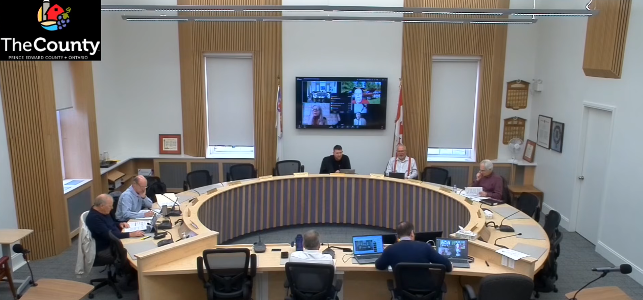
View the entire PEC Council meeting, or continue to speaker comments and councillor votes>
A Pause on Long-Term Rate Planning
The central discussion came from a report presented by Director of Finance Arryn McNichol, who explained that the County is not ready to finalize a full water and wastewater rate study just yet.
Originally, staff planned to bring forward a complete rate study this year. That would typically guide how much residents pay over several years, based on infrastructure needs, operating costs, and growth projections. But that plan has now been pushed back. McNichol explained that key inputs are still being developed, particularly a broader water and wastewater infrastructure strategy tied to growth. Without that, any long-term rate decision would be built on incomplete information.
Instead, the County is treating this as a transitional year. The plan is to introduce a one-year rate bylaw, allowing time to gather accurate data and complete a full study next year. The message from staff was simple: better data leads to better decisions.
What a One-Year Approach Means
Councillor Phil St-Jean asked for clarity on what this would look like in practice. Would rates simply stay the same for a year?
McNichol clarified that holding rates completely flat is unlikely. Instead, staff are considering a modest increase tied to indexing, such as inflation.

The concern is that leaving rates unchanged could create financial pressure. Rising operating costs and the need to maintain reserves mean the system still needs steady revenue. Indexing helps keep things stable without making major changes before the full study is complete.
This approach also ensures the County remains aligned with its Water Financial Plan, which requires long-term sustainability.
In practical terms, residents may still see a small increase, but not a major restructuring of how rates are calculated. The bigger changes are expected to come after the full study is completed.
Questions Around Affordability and Relief
The conversation shifted when committee member Bob Cooke raised concerns about the County’s bill relief program.
Cooke pointed out that the program has not been updated in several years, and the income thresholds no longer reflect current definitions of low income. As a result, some residents who may need help could be excluded.
He also noted that the cost of expanding the program would be relatively small compared to total water revenue. From his perspective, updating the program should be part of the broader discussion on rates.
McNichol responded that a review of financial relief is already in the works as a separate initiative, with a pilot project expected from another department.
Councillor Janice Maynard reinforced that point, explaining that the relief program functions as a social support measure with its own criteria and funding considerations. While related to affordability, it is not directly tied to how water rates are set.
How Rates Might Be Adjusted

Another key question from Maynard focused on how the County would actually decide on the interim increase.
McNichol outlined a few possible approaches, including using the Consumer Price Index (CPI) to reflect operating costs or a construction-based index tied to capital projects.
At this stage, no final method has been chosen. Staff plan to bring forward options, along with explanations, so the committee can weigh in before making a recommendation to Council.
Maynard also suggested that external costs, such as what the County pays for water from nearby municipalities, could help guide the decision. That would give residents a clearer reference point for why rates might change.
Looking Ahead to Next Meetings
With the one-year approach approved, attention turned to what comes next.
The committee expects to revisit the issue in May 2026, when a draft bylaw and recommended rate adjustment will be presented.
There was also discussion about future agenda items. Cooke highlighted the need for updates on Pete’s Point infrastructure planning and better public communication about the changing direction on water rates.
Councillor St-Jean raised another longer-term topic that has been circulating in the community: the idea of a Municipal Services Corporation model for water and wastewater. While no decisions were made, staff confirmed that a discussion could be brought forward in a future meeting.
By the end of the meeting, the committee had agreed to move forward with the transitional plan and continue refining details over the coming months.
Key Takeaways for PEC Residents
The County is delaying its full water and wastewater rate study to ensure decisions are based on complete and accurate data.
Residents can expect a one-year rate bylaw with a likely modest increase, rather than a major overhaul of the rate system.
Discussions about affordability, infrastructure planning, and long-term service models are still ongoing and will shape future decisions beyond 2026.
Disclaimer: This article is based on a meeting with an approximate duration of 24:45. Due to the length of the meeting, our team was not able to independently review the full recording in its entirety. As a result, we relied on software-generated transcription, automated summarization, and automated recognition of speakers and participants, which may not be entirely accurate. All transcriptions, summaries, and related content are prepared by our team in good faith and on a reasonable best-efforts basis. The content is provided for general informational purposes only and is intended to support public understanding of the topics discussed. While reasonable efforts have been made to present the information accurately, automated processes may result in errors, omissions, or unintended misinterpretations. This article does not constitute an official, certified, or verbatim record of the meeting, and it should not be relied upon as such. Readers are encouraged to consult original source materials, official minutes, or recordings where available for confirmation or clarification. Questions, requests for clarification, or suggested corrections may be submitted to hello@pecconnect.ca for review and consideration.


Comments